
Well, it actually happened. The American people have spoken; real estate mogul and alleged hate monger Donald Trump will be the 45th president of our great nation. How great our nation will soon be however remains quite a divisive subject among our nation's populace. As we look forward to the upcoming holiday season, many of us are somewhat nervous about facing the same family members we recently hurled insults at over turkey, stuffing and a few too many glasses of fall punch.
Although families endure the same session of politically fueled verbal combat at Thanksgiving every four years, many Americans are convinced that this election was different. An overwhelming number of millennials voiced varying combinations of joy, astonishment, anger and disappointment on every possible form of social media following the election, despite the fact that many of them didn't put the same energy into going out and voting for their candidate. This hurt Hillary the most, who was banking on the primarily liberal 18-29 year old demographic of voters to show up for her like they did for Obama in 2012. This year also saw a rise in third party supporters among the same age demographic.
According to analysis of exit poll data by the Center for Information & Research on Civic Learning and Engagement (CIRCLE), only approximately half of eligible voters aged 18-29 went to the polls, quite a poor turnout when compared to the already disappointing estimated general voter turnout rate of 58%. Considering that millennials made up 31% of this year's electorate (about equal to the Baby Boomers) as opposed to 19% four years ago, the age demographic is not making great use of its newfound political influence.
So, aside from a drop in young, liberal voter turnout, why was this election really different?

While a popular way to rationalize one's vote to judgmental friends this year was "well, I really didn't like either of them, but I just couldn't vote for [insert candidate here]," this is not the first election where a large portion of the United States populace wasn't enthusiastic about either candidate. Shows such as South Park have been hitting on America's general dislike for both major party candidates for years, so why did Hillary and Trump seem so much more polarizing than any other due of candidates we've ever seen?
First of all, both candidates had abysmal approval ratings despite their ability to win the majority of their parties' support. However, before we place all the blame on the candidates for being so damn unlikable, Americans need to ask ourselves how much we have changed throughout the past few elections.

In the past 20 years, we've seen a significant shift in the median ideology of your average Republican and Democrat. According to a recent survey by the Piew Research Center, Americans ideologically shifted from identifying as generally moderate with a slight lean in one direction or the other to more commonly identifying as consistently liberal or conservative. This is in large part due to the way that politicians have been running their campaigns.
Statistics have shown that candidates that appeal to the extremes of either side of the political spectrum tend to get more votes in the primaries than candidates that campaign on more moderate platforms. However, it is because of this type of political campaigning that we continue to end up in the same dilemma over and over, leaving moderate Americans to choose between two candidates they dislike, but to an increasing extent.
Politicians are certainly not the only aspect of politics that have become more polarizing in recent years. The way that mass media treats elections has dramatically evolved in the past two decades. There are far more news outlets than there were in 1992, where just four or five reporters from major news outlets would huddle together and reach a general consensus on televised debates. Today, every person with a twitter account and a camera phone can be a citizen journalist and professional journalists are no longer the gatekeepers of information that the framers of the Constitution intended them to be.
The internet is populated by a vast swath of news sources that vary in credibility as much as they do balance. Today, citizens are most likely to search for news sources that confirm their already existing political ideology and set of beliefs, a psychological phenomenon known as "confirmation bias."According to POLITICO executive director Peter Canellos, "in their minds all news is biased and ideological, so they follow the news source that most closely reflects their own views."

Avoiding news that conflicts with one's world view can be comforting at times. After all, you're essentially creating an informational safe space for yourself. Many student groups and some universities would love to create a web browser that filtered out any facts that could make students uncomfortable and keep them swaddled in a warm blanket of ignorance, but deliberately giving oneself informational tunnel vision no way to go through life.
As we currently stand, 36% of Republicans see Democrats as a threat to the nation's wellbeing and 27% of Democrats feel the same way about Republicans, a sentiment many of us struggled with when hugging family members goodbye just 10 minutes after their drunken tirade against the candidate you just happened to vote for. So yes, this election was different.
We as the American people are different, we've become too embroiled in how fun it is to dump on the other side and ended up putting two of the most despicable examples of Americans possible into a muckraking battle for control of our nation. However, the election is over and with all of us sufficiently through aftershocks of Thanksgiving dinner it is time to rebuild and reconcile with one another.
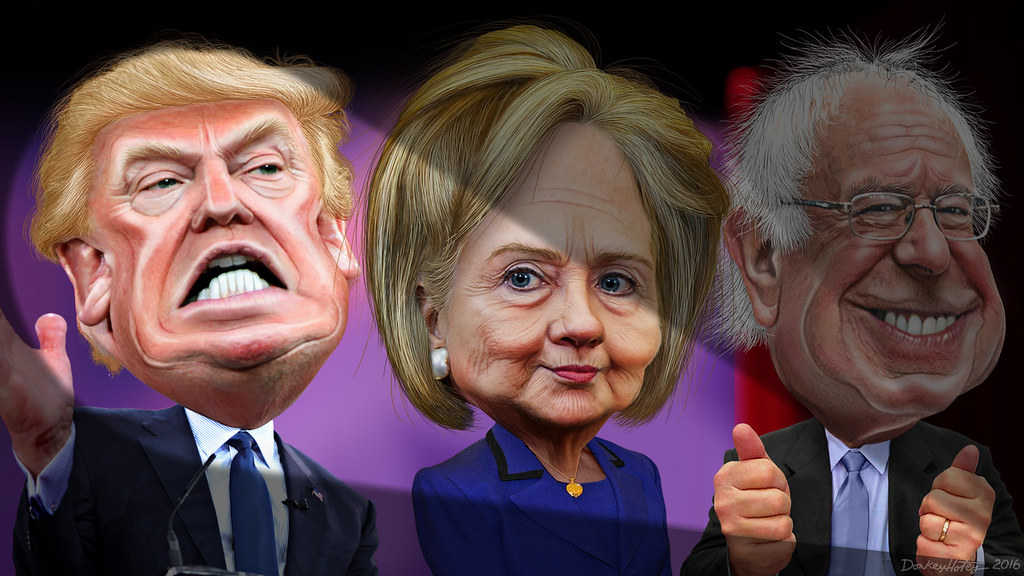
While the journalistic community continues to try to reconcile with the fact that Trump wouldn't be our next president without the help of our government's fourth institution, it is up to average Americans to try to bridge the gap that they helped create. If we want to ensure that we never have an election like this again, we can't shrink from constructive, respectable political dialogue (for all of you college protesters, a dialogue is in fact NOT yelling at people you disagree with and not listening to opposing viewpoints).
That means accept the result of the election for better or for worse (I know you may think he's "not my president," but he's your president) and keep on living your life. The world will not end, our government was set up with checks and balances to keep any branch from getting out of hand. Although it can be frustrating at times, the only way that we can be more united as Americans is to be willing to tolerate and compromise with one another.
The beautiful part of tolerance is it saves you all the energy that you would typically expend spreading more divisiveness among your peers. After all, you probably didn't have to call Hillary a crazy b**ch in front of your niece and nephew or check your Uncle's privilege while he passed the mashed potatoes. So apologize to any family members you need to before Christmas dinner and move on with your life. And who knows? you might have just enough energy to actually go out and vote next election.
